If you’re browsing bathroom remodel ideas for 2026, here’s the short answer: the strongest trend this year isn’t a single finish or a flashy fixture — it’s intention. Homeowners across the Dallas-Fort Worth area are moving away from bathrooms that just function and toward spaces that feel genuinely restorative. That shift is showing up in material choices, layouts, lighting decisions, and even how people think about storage. Whether you’re planning a master bath overhaul in Frisco, a guest bath refresh in Arlington, or a complete primary suite transformation in Richardson, this guide covers what’s resonating right now and what’s worth your remodeling budget.
Why Are So Many DFW Homeowners Remodeling Their Bathrooms Right Now?
It’s a fair question. Part of the answer is practical — a lot of North Texas homes built in the 1990s and early 2000s are due for their first real update. Jetted tubs that nobody uses, single-sink vanities squeezed into awkward corners, builder-grade tile that’s held on admirably but never quite felt like a home. The bones are fine; the finishes just need to catch up with the way people actually live.
The other part is emotional. The bathroom is one of the few rooms in the house where you get genuine quiet. People want that space to feel calming rather than just clean. That’s a real design goal, and it’s one that a thoughtful remodel can actually deliver.
What’s Driving Bathroom Design in 2026?
Warm, Earthy Tones Are Replacing the All-White Bathroom
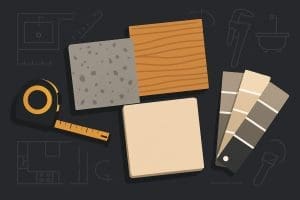
The crisp all-white bathroom had a long run, and it still photographs beautifully. But homeowners are increasingly gravitating toward warmer palettes — creamy whites, soft taupes, warm greiges, and muted terracottas. These shades feel less clinical and more like a room you’d actually want to spend ten unhurried minutes in on a Tuesday morning.
This doesn’t mean color everywhere. It might mean a warm-toned vanity paired with white walls, or a single accent wall in large-format tile with natural stone variation. The goal is warmth without visual noise.
Natural Materials With Real Texture
Along with warmer colors comes a shift toward materials that have some physical character — stone-look porcelain, honed finishes (matte rather than polished), wood-look tile on floors, and natural stone accents at the vanity or shower niche. These surfaces photograph with depth and, more importantly, feel substantial underfoot and underhand in a way that high-gloss surfaces often don’t.
One practical note: honed and matte finishes can show water spots more readily than polished surfaces, especially in the DFW area where hard water is common. It’s worth a conversation about sealing and maintenance before you commit — a good contractor will walk you through the tradeoffs honestly rather than just selling you on the look.
Large-Format Tile and Fewer Grout Lines
This one has momentum for good reason. Larger tiles — think 24×48 or even bigger slabs used on shower walls — create a cleaner, more open visual. Fewer grout lines also means less maintenance over time, which is a real-world benefit for homeowners in Plano, Anna, or anywhere else where a busy household means the bathroom gets daily use. The tradeoff is that large-format tile requires a highly level substrate and careful installation; this is not a place to cut corners on labor.
Walk-In Showers as the Centerpiece
The freestanding soaking tub had its moment as the focal point of the primary bath. That’s not gone entirely, but the conversation has shifted. Most DFW homeowners remodeling their primary bath in 2026 are investing in a generous, thoughtfully designed walk-in shower — curbless or low-threshold entry, a bench seat, a rainfall head paired with a handheld, and good niche storage built in. The result is a shower that feels like a destination rather than an afterthought.
If your master bath currently has a large tub and a cramped shower, converting that footprint into a spacious walk-in shower (with or without retaining a smaller soaking tub) is one of the highest-impact changes you can make. Our bathroom remodeling team does this conversion regularly for homeowners across the Metroplex.
Vanity Storage That Actually Works
Open shelving had a design moment and is slowly making way for smarter enclosed storage — deep drawers, pull-out organizers built into the vanity cabinet, and medicine cabinets that are recessed into the wall rather than mounted on it. The goal is a countertop that’s genuinely clear rather than one that’s clear only in staging photos. Floating vanities continue to be popular for the open-floor visual they create, especially in smaller bathrooms where every visual inch matters.
Lighting That Does More Than One Thing
Builder-grade bathroom lighting — a single bar fixture above the mirror — does a mediocre job of everything. In 2026, homeowners are layering light: dedicated task lighting at the vanity for the mirror, ambient overhead lighting (often recessed), and sometimes accent lighting inside niches or beneath a floating vanity. Dimmer switches are a small add-on that dramatically changes how the room feels at 6 AM versus 9 PM. If you’re already opening up walls for a remodel, this is exactly the moment to do the lighting right.
Smarter Use of Small Spaces
Not every DFW homeowner has a sprawling primary bath to work with. Guest baths, hall baths, and older homes often present real square-footage constraints. The design response isn’t to cram in a smaller version of everything — it’s to make deliberate choices. A single large mirror instead of two small ones. A frameless glass shower enclosure that keeps the eye moving. A wall-mounted toilet that frees up floor space and is easier to clean. Thoughtful tile direction to lengthen or widen a room visually. Small bathrooms done well feel intentional, not cramped.
What About Trends That Are Fading?
A few things that felt fresh a few years ago are starting to feel dated in newer remodels: overly dark moody bathrooms with no natural light compensation, matchy-matchy fixture sets where every metal finish is identical, and barn doors on bathrooms (sound isolation is a real issue). None of these are disasters if you already have them, but if you’re starting fresh, they’re worth reconsidering.
What Makes a Bathroom Remodel a Good Investment in North Texas?
Return on investment in a bathroom remodel depends heavily on scope, materials, and what your home needs relative to comparable homes in your neighborhood. That said, bathrooms consistently rank among the remodeling projects that add real value — both in appraiser’s eyes and in daily quality of life. In DFW’s competitive housing market, an updated primary bath is often the difference between a home that shows well and one that requires explanation.
The more honest answer is this: if you plan to stay in your home for several more years, the value is less about resale math and more about whether the space serves your life well. A bathroom you actually enjoy using every day is worth something that doesn’t show up in a square-footage calculation.
For homeowners thinking about the broader financial picture, Pro Care also offers financing options to help make a meaningful remodel accessible without draining savings all at once.
How Does Pro Care Approach a Bathroom Remodel?
We work with homeowners across Dallas, Fort Worth, Plano, Frisco, Lancaster, and dozens of cities in between. Our process starts with a free in-home estimate — not a ballpark over the phone, but an honest conversation about what you’re hoping to accomplish, what the space actually needs, and what’s realistic for your budget. We’d rather give you a clear picture upfront than have an awkward conversation later.
Before any work starts, we lock in a timeline and material selections together so you know what to expect and when. If you decide to make a change partway through — swap the tile, add a niche, change the fixture finish — we’ll walk you through exactly what that means for cost and timeline before it happens, not after. Nothing is done until you’ve walked through the finished space with us and said it’s right.
That’s how we’ve worked for more than 30 years, and it’s why most of our business comes from referrals and repeat customers.
Ready to see what’s possible in your bathroom? Get a free estimate and let’s talk through your project — no pressure, no obligation, just an honest conversation about what makes sense for your home.
Frequently Asked Questions
What’s the most popular bathroom remodel in DFW right now?
Walk-in shower conversions are consistently the most requested update — especially converting underused jetted tubs into spacious, curbless walk-in showers with built-in seating and rainfall fixtures. Paired with updated tile and vanity lighting, this transformation tends to have the biggest day-to-day impact.
How long does a bathroom remodel typically take?
A mid-range primary bath remodel — new tile, new vanity, new shower or tub surround — typically takes two to four weeks once work begins, depending on scope and material lead times. More extensive projects involving layout changes or custom tilework may run longer. Pro Care locks in a timeline before work starts so you know what to expect.
Do I need a permit to remodel my bathroom in the DFW area?
It depends on the scope of work and your specific city. Cosmetic updates like replacing fixtures or retiling generally don’t require a permit, but work involving plumbing relocation, electrical changes, or structural modifications typically does. Permit requirements vary by municipality across the Metroplex, so it’s worth confirming with Pro Care or your local permitting office before work begins.
Is it worth keeping the soaking tub in my primary bath?
That depends on whether you actually use it. Many homeowners find that a soaking tub they pictured using sits empty, while a generous walk-in shower gets used daily. If resale is a near-term consideration, some buyers do look for a tub in the primary bath — but a beautifully designed walk-in shower is increasingly what buyers in DFW notice and remember. It’s a good question to think through honestly before committing either way.
What’s the difference between porcelain tile and natural stone for a bathroom remodel?
Porcelain — especially large-format stone-look porcelain — is more consistent in appearance, harder, less porous, and generally easier to maintain than natural stone. Natural stone (marble, travertine, quartzite) has variation and warmth that porcelain approximates but doesn’t fully replicate. Stone requires sealing and more attentive maintenance, particularly in DFW’s hard-water environment. Both are excellent choices; the right one depends on your maintenance preferences and budget.